An analysis of preanalytical errors in the Biochemistry Unit of the National Referral Hospital in Bhutan: A descriptive study
- 1Faculty of Undergraduate Medicine, Khesar Gyalpo University of Medical Sciences of Thimphu, Bhutan
- 2Department of Otolaryngology, Jigme Dorji Wangchuck National Referral Hospital, Thimphu, Bhutan
- 3Medical Education Center for Research, Innovation and Training, Khesar Gylapo University of Medical Sciences of Bhutan, Thimphu, Bhutan
- 4Biochemistry Unit, Department of Pathology and Laboratory, Jigme Dorji Wangchuck National Referral Hospital, Thimphu, Bhutan
ABSTRACT
Introduction: Accurate and timely reporting of laboratory results is essential for optimal patient management. The testing process in clinical biochemistry is divided into pre-analytical, analytical, and post-analytical phases. This study assessed the sample rejection rate and identified common pre-analytical errors in the Biochemistry Unit of Jigme Dorji Wangchuck National Referral Hospital. Methods: A retrospective observational study was conducted by reviewing records of all rejected samples in the Biochemistry Unit from January 2019 to December 2020. Results: Of 197,735 samples received for biochemical testing, 283 were rejected, giving an overall sample rejection rate of 0.14%. The most common reasons for rejection were insufficient sample volume (51%) and hemolysed samples (28%). The neonatal intensive care unit contributed the highest proportion of rejected samples (32%), followed by inpatient wards (25%) and the emergency department (17%). Conclusion: The sample rejection rate in the Biochemistry Unit was low at 0.14%, with insufficient sample volume being the leading cause of rejection. Targeted training in neonatal blood collection, adherence to standardized collection protocols, and the use of micro-collection tubes may help mitigate pre-analytical errors and improve sample adequacy.
INTRODUCTION
The role of clinical laboratories in patient management has become more crucial with the growing emphasis on healthcare quality and patient safety. Timely and accurate laboratory reports enable clinicians to make appropriate and timely patient management decisions. The reliability of laboratory reports relies on the integrity of all three phases of the total testing process: pre-analytical, analytical and post analytical phases. Numerous studies have shown that errors commonly occur in the pre- analytical phase, accounting for 46-62 % of all laboratory errors1,2.
According to the ISO 15189: 2012 standard, the pre-analytical phase includes all steps from test requisition to the analysis of the sample. A hospital-based study in India investigating pre-analytical errors identified inappropriate containers, delays in sample transport, hemolysed samples, insufficient sample volumes and contamination from infusion routes as primary causes of sample rejection3. These errors can consequently delay diagnosis, leading to physical and psychological distress among patients who may require repeat blood sampling, while some even abandoning the test altogether 4,5. In a Q-Probes analysis conducted by the College of American Pathologists involving 78 clinical laboratories, the overall specimen rejection rate was reported to be 0.2% 5.
Laboratory errors are a significant concern as 60-70% of clinical decisions rely on laboratory results6.These errors increase healthcare costs through unnecessary wastage of consumables, healthcare personnel time and may compromise the delivery of quality services. In Bhutan, studies on laboratory errors are limited. A study conducted in the biochemistry laboratory in Gelephu examined the increasing utilization of laboratory services, but laboratory errors were not evaluated due to lack of proper recording of test conducted and shortage of quality control material.
This study aims to establish a baseline sample rejection rate in our laboratory and identify pre-analytical factors contributing to sample rejection. The findings will support the development of corrective and preventive measures, as well as the establishment of quality indicators to improve laboratory services and patient management.
METHODOLOGY
Study design
A retrospective observational descriptive study was conducted in the Biochemistry Unit of the Jigme Dorji Wangchuck National Referral Hospital (JDWNRH) in Thimphu, Bhutan, using data from January 2019 to December 2020.
Study setting
The Biochemistry Unit is part of the Department of Pathology and Laboratory Medicine at JDWNRH. It provides laboratory services for inpatient, outpatient and emergency department patients. The department also includes the Pathology, Microbiology, Hematology and Blood Bank units.
The Biochemistry Unit performs a wide range of investigations, including routine chemistry parameters, tumor markers, hormone assays and Therapeutic Drug Monitoring (TDM). It is equipped with the Canon 2000SR and ROCHE E41 auto analyzers, which are used to analyse tests such as Fasting Blood Sugar (FBS), lipid profile, serum creatinine, Liver Function Tests (LFT), Renal Function Tests (RFT), tumor markers, hormones and therapeutic drug levels.
For outpatient services, blood samples are collected by phlebotomists, while samples from inpatient wards are collected by either phlebotomists or nurses. Patient demographics and requested investigations are entered into the Laboratory Information System (LIS), which generates a barcode that is affixed to each specimen. The samples are transported to the laboratory by the ward assistants or phlebotomists.
Study population
The study included all records of rejected blood samples in the Biochemistry Unit of JDWNRH from January 2019 to December 2020.
Sampling method
A census sampling method was used. All blood samples rejected by the Biochemistry Unit between January 2019 and December 2020 were included in the study.
Study variables
The study variables included the reason for rejection, source of sample and the time of sample collection. The reasons for sample rejection included insufficient sample volume, hemolysed sample, contaminated sample, lipaemic sample, clotted sample, and wrong vial. The source of the rejected samples were categorized as inpatient wards, outpatient department, emergency department, Neonatal Intensive Care Unit (NICU) and Adult Intensive Care Unit (AICU). The timing of sample collection was classified as morning (8am - 2pm), evening (2pm - 8pm) and night (8pm - 8am).
Data management
All the data of the rejected samples are maintained in a hard copy register in the Biochemistry Unit. The data were extracted by the principal author from this register.
Patient data were de-identified before analysis by assigning unique study identification serial numbers and removing all direct patient identifiers. The linkage file was stored separately in a secure, password-protected location with access restricted to the principal investigator.
Statistical analysis
Data was entered into EpiData (version 3.1, EpiData Association, Odense, Denmark) and then exported to stata format (dta) format. Statistical analysis was performed using StataCorp (version 14.2, StataCorp LLC, College Station, TX, USA).
Descriptive statistics were used to summarize the reasons for sample rejection, source of rejected samples, and the time of rejection. The findings are presented as frequencies and percentages.
Ethical considerations
Ethical clearance was obtained from the Institutional Review Board (IRB/Approval/PN21-017/2021/519). As this was a retrospective record-based study involving no direct patient contact, the requirement for informed consent was waived off by the Institutional Review Board.
Administrative clearance was obtained from the Ministry of Health and site clearance was sought from JDWNRH.
RESULTS
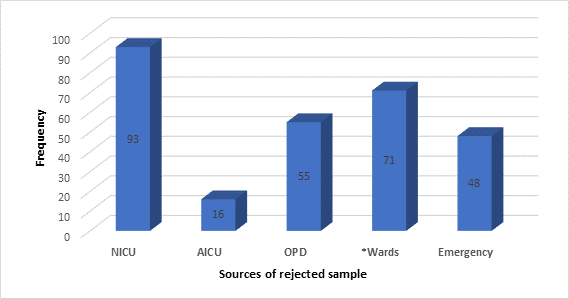
A total of 197,735 samples were received for various biochemical investigations between January 2019 and December 2020. Of these, 283 samples were rejected, corresponding to an overall rejection rate of approximately 0.14%. The majority of rejected samples originated from the NICU, which accounted for 32% of all rejections. This was followed by samples from inpatient wards (25%) and the emergency department (17%), as illustrated in Figure 1.
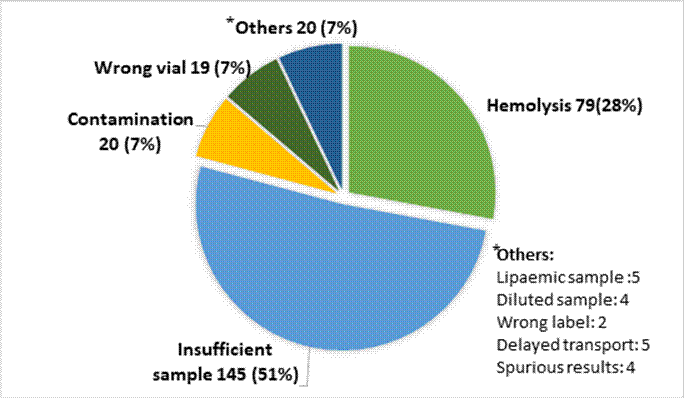
Insufficient sample volume was the most common reason for sample rejection, accounting for 51% (n=145) of rejected samples, followed by hemolysis at 28% (n=79). Other causes of rejection included incorrect collection tubes, sample contamination, lipaemic and spurious samples, as illustrated in Figure 2.
Insufficient sample volume was most frequently observed in samples from the NICU (59%), followed by the inpatient wards (32%) and the emergency department (22%). Hemolysis was the second most common reason for sample rejection. Most hemolyzed samples originated from the inpatient wards (30%, n=24), followed by the emergency department (29%, n = 23), as shown in Table 1.
|
Reason for sample rejection |
Site of sample collection |
||||
|---|---|---|---|---|---|
|
NICU |
AICU |
Emergency |
Ward |
OPD |
|
|
Insufficient volume |
81 |
2 |
20 |
32 |
10 |
|
Hemolysis |
8 |
11 |
13 |
24 |
23 |
|
Wrong vial |
0 |
0 |
8 |
3 |
8 |
|
Contaminated sample |
1 |
2 |
4 |
9 |
4 |
|
Others* |
3 |
1 |
3 |
3 |
10 |
⃰ Others include: lipaemic sample (5), diluted sample (4), wrong label (2), delayed transport (5), spurious results (4).
Samples were collected throughout the day according to patients' clinical needs. Among the rejected samples, the highest proportion was collected during the morning shift (43%), followed by the evening shift (41%) as shown in Table 2.
|
Time of collection |
Total n=283 |
NICU |
AICU |
Emergency |
Wards |
OPD |
|---|---|---|---|---|---|---|
|
Morning |
122(43%) |
40 |
7 |
21 |
31 |
24 |
|
Evening |
116(41%) |
38 |
6 |
20 |
29 |
23 |
|
Night |
44(16%) |
15 |
3 |
7 |
11 |
8 |
DISCUSSION
In this study, sample rejection rate was evaluated as an indicator of pre-analytical performance in the Biochemistry Unit of JDWNRH. Between January 2019 and December 2020, a total of 197,735 samples were received for analysis, of which 0.14% were rejected due to various pre-analytical errors. Reported sample rejection rates vary widely across different regions, with rates of 0.74% in the US, 1.46% in South Africa, 1.28% in Turkey, and 2.2% in Iran8-11. A higher rejection rate of 10.6% has been reported from India while the global prevalence of pre-analytical errors is estimated at approximately 1.99% 1,3.
The rejection rate observed in this study is lower than previously reported international rates, indicating an effective sample collection and handling system within the institution. However, under-reporting remains possible, as some rejected samples may not have been consistently documented.
The most common reason for sample rejection in this study was insufficient sample volume. Similar patterns have been reported in studies conducted in India, Turkey, and Malaysia, suggesting that insufficient samples remain an important pre-analytical challenge across different healthcare settings3,10,12. Insufficient sample volume is frequently observed in neonatal, pediatric and oncology populations due to the inherent difficulties in establishing and maintaining peripheral venous access13,14. This is concordant with the findings of the present study, where the NICU was the primary source of samples rejected due to inadequate volume.
The second most common reason of sample rejection was hemolysis. It has also been reported as a major cause of specimen rejection in studies from United States, Iran, Malaysia, and India 3,8,11,15. It may result from multiple factors during specimen collection and handling, such as inappropriate needle gauge selection, excessive negative pressure during blood aspiration, vigorous shaking of collection tubes, or centrifugation prior to complete clot formation1. Besides compromising specimen integrity, hemolysis increases turnaround time due to the need for repeat sampling, thereby adversely affecting laboratory workflow and patient care 9,15,16.
Sample contamination accounted for a smaller proportion (7%) of rejections in this study. The identified causes included collection from intravenous infusion sites and contamination with substances such as EDTA and antiseptic agents. Although contamination is reported in studies from Saudi Arabia and India, they have accounted for a small proportion of rejected samples 3,17. Since contamination represented a relatively significant cause of rejection in this study, it highlights the need to reinforce phlebotomy training and adherence to standard venipuncture techniques and strict avoidance of sample contamination during collection.
Clotted samples, which have been identified as a major cause of pre-analytical rejection in other studies were uncommon in this study 2,8,13,17. This indicates appropriate practices related to tube filling, sample mixing, and handling.
In this study, the highest proportion of rejected samples originated from the NICU (33%), followed by the inpatient wards (25%) and the emergency department (20%). Similar studies have reported varying sources of sample rejection, with inpatient wards identified as the main contributor in Malaysia while studies from Turkey and the United States have reported the emergency department as the predominant source 8,12,13. The high rejection ate from the NICU was primarily due to insufficient specimen volume. This finding is expected due to the challenges associated with neonatal blood collection, including small caliber of veins and limited blood volume. As neonatal sampling is often performed by nursing staff, specialized skills are essential to minimize pre-analytical errors. These findings highlight the need for targeted neonatal phlebotomy training and the use of supportive measures such as vein visualization devices and micro-collection tubes to improve sample adequacy and reduce rejection rates.
LIMITATIONS
This study has several limitations that should be considered. The analysis was based only on rejected sample records from the Biochemistry Unit and did not include data from other laboratory units. Additionally, the retrospective study design may have introduced recording bias, as some rejected samples may have been underreported by laboratory personnel.
CONCLUSIONS
The overall sample rejection rate in the Biochemistry Unit was low at 0.14%. Insufficient sample volume was the leading cause of rejection, followed by hemolysis. The NICU contributed the highest proportion of rejected samples, followed by inpatient wards and the emergency department.
Recommendations
Strengthening staff training, standardizing sample collection procedures, and implementing regular audit and feedback systems may further reduce sample rejection rates. The use of micro collection tubes, particularly in neonates and individuals with difficult venous access, may help mitigate rejections due to inadequate sample volume. Further multicenter studies involving regional laboratories and diverse specimen types are recommended to better characterize pre-analytical errors and develop comprehensive and generalizable quality improvement strategies.
ACKNOWLEDGEMENT
The authors would like to express their sincere gratitude to all technologists, technicians, and phlebotomists in the Biochemistry Unit at JDWNRH for their valuable contribution and support throughout the study. The authors also extend their appreciation to the staff in the other units of the Department of Pathology and Laboratory Medicine for their assistance and cooperation whenever required.
REFERENCES
- Getawa S, Aynalem M, Melku M, Adane T. Blood specimen rejection rate in clinical laboratory: A systematic review and meta-analysis. Pract Lab Med. 2022:33:e00303. [PubMed] [Full Text] [DOI
- Bhuyar BK. A Study of Pre-Analytical Errors in a Hospital Based Clinical Biochemistry Laboratory. Int J Biotechnol Biochem. 2017;13(2):111-21. [Full Text
- Bhutani N, Bhutani N. An Analysis of Preanalytical Errors and Turnaround Time in Emergency Biochemistry Laboratory in a Tertiary Care Hospital in New Delhi. J Evolultion Med Dent Sci. 2020;9(13):1065-8. [Full Text] [DOI
- Gupta P, Thomas M, Sbetan N, Chacko G, Savarimuthu I, Cherian P, Abas A, Shiju S, Karim S, Kanaan A, Bautista G. A quality improvement initiative to reduce rejected laboratory samples and enhance specimen acceptability. Jt Comm J Qual Patient Saf. 2021;47(8):519-25. [PubMed] [Full Text] [DOI
- Karcher DS, Lehman CM. Clinical consequences of specimen rejection: a College of American Pathologists Q-Probes analysis of 78 clinical laboratories. Arch Pathol Lab Med. 2014;138(8):1003-8. [PubMed] [Full Text] [DOI
- Rohr UP, Binder C, Dieterle T, Giusti F, Messina CG, Toerien E, et al. The value of in vitro diagnostic testing in medical practice: a status report. PloS One. 2016;11(3):e0149856. [PubMed] [Full Text] [DOI
- Chhetri V, Yangchen K, Dawa C. Increasing Trend of Clinical Laboratory Testing at Gelephu Central Regional Referral Hospital, Bhutan. Int J Innovative Res Med Sci. 2018;3(11):2265-9. [Full Text] [DOI
- Rooper L, Carter J, Hargrove J, Hoffmann S, Riedel S. Targeting Rejection: Analysis of Specimen Acceptability and Rejection, and Framework for Identifying Interventions in a Single Tertiary Healthcare Facility. J Clin Lab Anal. 2017;31(3):e22060. [PubMed] [Full Text] [DOI
- Jacobsz LA, Zemlin AE, Roos MJ, Erasmus RT. Chemistry and haematology sample rejection and clinical impact in a tertiary laboratory in Cape Town. Clin Chem Lab Med. 2011;49(12):2047-50. [PubMed] [DOI
- Dundar C, Bahadir O. Preanalytical Errors in Clinical Biochemistry Laboratory and Relationship With Hospital Departments and Staff: A Record-Based Study. J Patient Saf. 2023;19(4):239-42. [PubMed] [DOI
- Jafari E, Afshar RM, Aminzade R. Rates and reasons of laboratory sample rejection due to pre-analytical errors in clinical settings. Arch Iran Med. 2022;25(3):166-70. [PubMed] [DOI
- Kamal F, Saman WAWM, Monir MA. Analysis of sample rejection and the impact on quality of care in patients in a single tertiary healthcare facility in Malaysia. Environ Proc J. 2020;5(13):175-81. [Full text] [DOI
- Atay A, Demir L, Cuhadar S, Saglam G, Unal H, Aksun S, et al. Clinical biochemistry laboratory rejection rates due to various types of preanalytical errors. Biochem Med. 2014;24(3):376-82. [PubMed] [Full Text] [DOI
- Garira G, Okafor CJ, Obeagu EI. Evaluation of Pre-Analytical Elements Affecting the Rejection of Hematology Samples at Masvingo Provincial Laboratory, Zimbabwe. Asian Hematol Res J. 2025;8(4):257-65. [Full Text] [DOI
- Darcy TP, Barasch SP, Souers RJ, Perrotta PL. Test cancellation: a College of American Pathologists Q-probes study. Arch Pathol Lab Med. 2016;140(2):125-9. [PubMed] [FullText] [DOI
- Lay IS, Pınar A, Akbıyık F. Classification of reasons for rejection of biological specimens based on pre-preanalytical processes to identify quality indicators at a university hospital clinical laboratory in Turkey. Clin Biochem. 2014;47(12):1002-5. [PubMed] [DOI
- Aldael ASM, Alshugaify AMO, Aljumah HIM, Alsalem ASA, Almuharib MMH, Daghriri ZA, et al. PreAnalytical Errors In Clinical Laboratory Practice Causes, Impact, And Strategies For Prevention. TPM Test Psychom Methodol Appl Psychol. 2025;32(s8):3071-82. [Full Text
AUTHOR CONTRIBUTIONS
Following authors have made substantial contributions to the manuscript as under:
SCR: Conceptualization, data collection, data analysis, manuscript writing.
SJ: Conceptualization, data analysis, manuscript writing and review.
NW: Data curation, manuscript review and edit.
Authors agree to be accountable for all respects of the work in ensuring that questions related to the accuracy and integrity of any part of the work are appropriately investigated and resolved.
CONFLICT OF INTEREST
None
GRANT SUPPORT AND FINANCIAL DISCLOSURE
None