CASE REPORT
https://doi.org/10.47811/bhj.213
Clinical characteristics and outcomes of Allopurinol hypersensitivity syndrome at a Regional Referral Hospital in Bhutan: A Case Series
Sonam Dema1, Tshewang Choden2, Pema Wangchuk1
1Department of Medicine, Eastern Regional Referral Hospital, Mongar Bhutan
2Department of Dermatology, Jigme Dorji Wangchuck National Referral Hospital, Thimphu Bhutan
Corresponding author:
Sonam Dema
sodragon0389@gmail.com
ABSTRACT
Allopurinol, a first-line urate-lowering therapy for gout, may rarely cause severe hypersensitivity reactions, including Stevens-Johnson syndrome (SJS), toxic epidermal necrolysis (TEN), and drug reaction with eosinophilia and systemic symptoms (DRESS), collectively classified as severe cutaneous adverse reactions (SCARs). We report a case series of three patients with allopurinol-induced SCARs managed at a regional referral hospital in Bhutan, comprising SJS, SJS/TEN overlap, and DRESS/TEN overlap. Two elderly females with multiple comorbidities and one younger male developed symptoms within weeks of initiating allopurinol. All patients required hospitalization and were treated with systemic corticosteroids; intravenous immunoglobulin (IVIG) was administered in two cases. One patient died due to septic shock following secondary infection. These cases highlight the importance of early recognition, prompt discontinuation of the offending drug, and timely intervention. In resource-limited settings, risk assessment, supportive care, and infection control are critical to improving clinical outcomes.
Keywords: Allopurinol; Drug eruptions; Erythema multiforme; Hypersensitivity; Severe cutaneous drug reaction
INTRODUCTION
Allopurinol is a commonly used first-line urate-lowering therapy for gout; however, it can rarely cause life-threatening reactions collectively termed allopurinol hypersensitivity syndrome (AHS), which includes Stevens-Johnson syndrome (SJS), toxic epidermal necrolysis (TEN), and drug reaction with eosinophilia and systemic symptoms (DRESS). AHS affects approximately 1 in 1,000 patients, typically occurring within 8 - 9 weeks of treatment initiation, and is associated with a mortality rate of 20 - 25%1,2. Recognized risk factors include renal impairment, genetic susceptibility, and high initial allopurinol doses2.
Drug reaction with eosinophilia and systemic symptoms (DRESS) typically presents with a diffuse skin eruption, eosinophilia, lymphadenopathy, and multiorgan involvement, most commonly affecting the liver, kidneys, and lungs⁴,⁵,⁶. Stevens-Johnson syndrome (SJS) is a rare, life-threatening mucocutaneous reaction characterized by epidermal detachment leading to widespread blistering and mucosal erosions⁴,⁵. Toxic epidermal necrolysis (TEN) is defined by extensive keratinocyte apoptosis resulting in full-thickness epidermal detachment with severe mucosal involvement affecting more than 30% of body surface area (BSA)⁴,⁵,⁶.
SJS is distinguished from SJS/TEN overlap and TEN based on the extent of epidermal detachment: <10% BSA for SJS, 10 - 30% for SJS/TEN overlap, and >30% for TEN⁴,⁵,⁶. Although these syndromes are distinct clinical entities, overlap between DRESS and TEN has been reported⁵,⁶. However, the literature on such overlap is limited. Available reports describe patients presenting with systemic inflammatory features of DRESS accompanied by extensive epidermal detachment (>30% BSA) consistent with TEN, posing significant diagnostic and management challenges, similar to findings observed in one of our cases⁵,⁶.
We report a case series of three patients with SJS, SJS/TEN overlap, and DRESS/TEN overlap, including one fatal outcome. Two patients were elderly with multiple comorbidities. This series underscores the importance of pre-prescription risk assessment, careful history taking, and prompt clinical evaluation to avoid delays in treatment, while providing rare regional data from Bhutan, where published evidence is limited.
PATIENT INFORMATION
CASE 1
A 78-year-old woman with a history of type 2 diabetes mellitus, hypertension, chronic kidney disease stage IIIB, and gout presented with redness of the eyes and painful oral ulcers, followed by a generalized skin eruption that initially involved the trunk but spared the palms and soles. She had sought care at a local hospital twice, but her symptoms persisted, prompting her to seek further evaluation from the Regional Referral Hospital.
On examination, she was noted to have generalized blanching erythema over the trunk and extremities, accompanied by hemorrhagic erosions of the lips (Figure1a,1b). Mucosal examination revealed ulceration of the soft palate and conjunctival injection, while the genital area remained unaffected. The combination of cutaneous and mucosal involvement, along with her recent exposure to allopurinol, raised concern for a severe cutaneous adverse reaction.
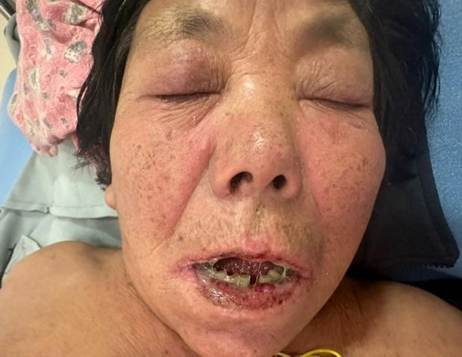
Figure 1a
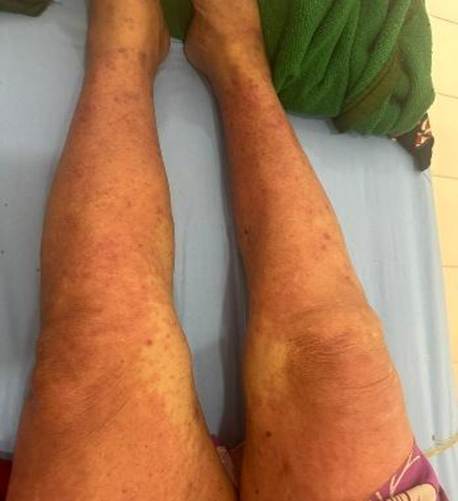
Figure 1(b)
Figure 1: (a) Crusted plaques with scattered erosions and purulent discharge involving the upper and lower lips, accompanied by periorbital oedema. (b) Erythematous plaques involving both lower legs.
Two days after admission, the patient developed dusky macules and papules coalescing into plaques over the chest, back, and both upper and lower extremities, with progression of oral lesions. Within 3 - 5 days, the skin lesions evolved into flaccid vesicles and bullae, leading to epidermal detachment involving <10% of body surface area (BSA).
A review of her drug history revealed recent initiation of allopurinol (100 mg, 20 days prior). Given the temporal relationship and clinical features, a drug-induced hypersensitivity reaction was suspected, and SJS was considered.
Laboratory investigations showed leukopenia, normal liver function tests, and deranged renal function consistent with her underlying CKD. Skin biopsy from the forearm and abdomen demonstrated focal hyperkeratosis, apoptotic keratinocytes, basal cell vacuolar degeneration, dermal pigment incontinence, and mild chronic inflammation without eosinophils, findings suggestive of a drug reaction.
Based on the clinical presentation, epidermal detachment <10% BSA with mucosal involvement and histopathology, a diagnosis of SJS was confirmed. Allopurinol was immediately discontinued, and high-dose prednisolone (1 mg/kg) was initiated. Intravenous immunoglobulin (IVIG) was unavailable at hospital. Dermatology consultation supported continuation of this management.
On the 12th day of admission, the patient developed fever. Examination revealed diffuse erythema with scaling and oral erosions with pus discharge. Pus culture grew Escherichia coli, sensitive to amikacin and gentamicin, and the patient was started on renal-adjusted gentamicin. Infection control measures, including isolation and daily wound care, were strictly implemented.
The patient gradually improved, with skin healing via desquamation and hypopigmentation. Prednisolone was tapered, and she was eventually discharged on oral steroids. She was counseled to avoid allopurinol and was switched to febuxostat for gout management, with follow-up planned for ongoing monitoring of her comorbidities.
CASE 2
An 84-year-old woman with a history of chronic obstructive pulmonary disease (COPD), ischemic heart disease (IHD), prediabetes, dyslipidemia, and hypertension developed generalized skin lesions that initially appeared on the face and progressed cephalocaudally over four days. The eruption was associated with facial puffiness, oral ulcers, conjunctival redness, and dysphagia, but she denied shortness of breath. Her course was complicated by acute kidney injury and hypotension, prompting transfer to regional referral hospital for further management.
On admission, she exhibited marked facial edema and dusky to erythematous infiltrative macules and papules coalescing into plaques over the chest, abdomen, back, and extremities (Figure 2a). The lesions were tender on palpation. Mucosal examination revealed oral erosions and ulcers, along with conjunctival injection (Figure 2b, 2c). No genital involvement was observed.
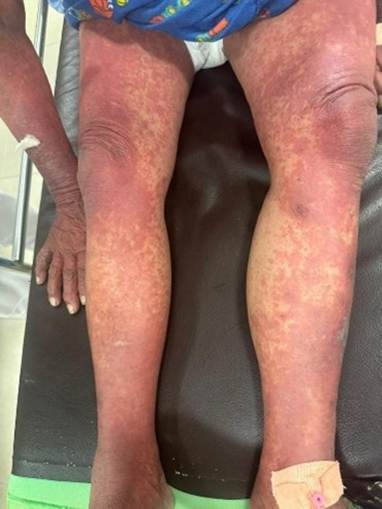
Figure 2a
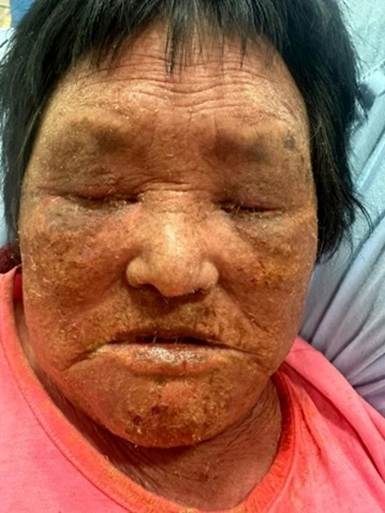
Figure 2b
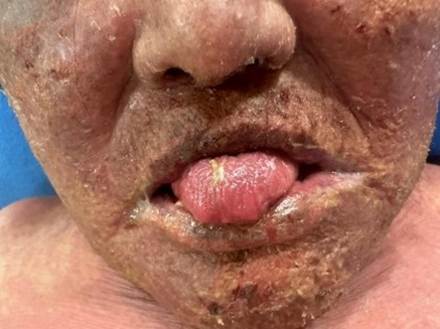
Figure 2c
Figure 2: (a) Multiple dusky erythematous macules and papules coalescing into plaques over both lower legs. (b) Yellowish crusted plaques with erosions, scaling, and fissuring involving the lips and upper cutaneous lip area, with discharge from the corners of the mouth and eyes. (c) Hyperpigmented plaques with scaling over both cheeks.
A few days after admission, the patient developed flaccid blisters and bullae, progressing to epidermal detachment involving approximately 16 - 30% of her body surface area (BSA). Review of her medical history revealed allopurinol initiation 14 days prior to symptom onset, raising suspicion for allopurinol-induced hypersensitivity syndrome.
Initial laboratory investigations showed leukocytosis and elevated C-reactive protein (CRP), with normal liver and renal function tests. Skin biopsy demonstrated focal hyperkeratosis, spongiosis with keratinocyte necrosis and dyskeratosis, basal cell vacuolar degeneration, and dermal pigment incontinence, consistent with a drug reaction. Based on the clinical features, extent of epidermal detachment (16 - 30% BSA), and biopsy findings, a diagnosis of SJS/TEN overlap was made.
Management included high-dose systemic corticosteroids, intravenous immunoglobulin (IVIG, 1 g/kg/day), IV antibiotics, and meticulous wound care. She subsequently developed a secondary infection with Klebsiella pneumoniae, initially treated with gentamicin and later switched to ciprofloxacin as per sensitivity report.
On the eighth day of admission, her condition deteriorated with hypotension and tachycardia. Laboratory tests revealed leukopenia, thrombocytopenia, and rising creatinine, and her wounds were found to be infected with carbapenem-resistant Pseudomonas aeruginosa. She received IV fluids, vasopressors, and polymyxin B according to sensitivity reports. Despite multidisciplinary intensive care, she became unresponsive and succumbed. The likely cause of death was overwhelming septicemia and septic shock leading to disseminated intravascular coagulation and cardiac arrest.
CASE 3
A 35-year-old man presented to the Emergency Department at JDWNRH with a rash affecting the face, trunk, and limbs. The eruption began as erythematous macules on the chest and gradually spread, coalescing into patches involving the face, trunk, extremities, and oral mucosa. He also reported intermittent fever and generalized body aches. Further history revealed that he had been taking oral allopurinol for gout. Three weeks earlier, he had been seen in the outpatient department for mild rashes and was advised to discontinue the medication; however, he continued its use, including concurrent alcohol consumption.
On examination, he had erythematous dusky macules and papules coalescing into plaques over the trunk and extremities, with tenderness on palpation. There were flaccid vesicles and bullae on the face, involving the bilateral eyelids and earlobes, along with crusted, scaly plaques around the nose and mouth. Mucosal examination revealed oral erosions and ulcers on the buccal mucosa and palate (Figure 3a). No genital lesions were observed.
Laboratory investigations revealed significant eosinophilia, elevated liver enzymes, and elevated C-reactive protein (CRP), while renal function tests were normal. Skin biopsy demonstrated numerous necrotic keratinocytes with subepidermal separation, and the dermis showed a perivascular lymphohistiocytic infiltrate with scattered eosinophils. Findings were consistent with interface dermatitis compatible with a drug-induced rash.
Based on his history of recurrent rashes, allopurinol use, and biopsy findings, a diagnosis of DRESS was initially established, and he was started on high-dose prednisolone. Despite these interventions, his condition worsened, and by day 3, he developed hemorrhagic crusting of the lips, dusky macules, and epidermal detachment involving approximately 60% of total body surface area, with positive Nikolsky's and Asboe-Hansen signs (Figure 3c), consistent with DRESS/TEN overlap. He was immediately started on IVIG along with high-dose prednisolone for five days and received intravenous ceftriaxone for infection coverage.
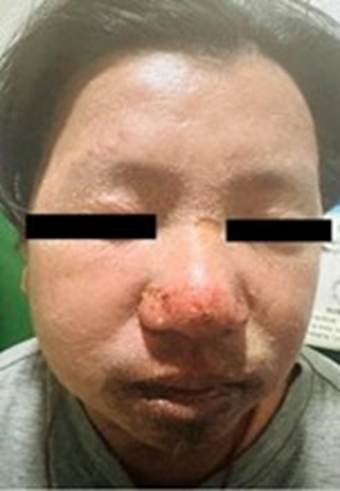
Figure 3a
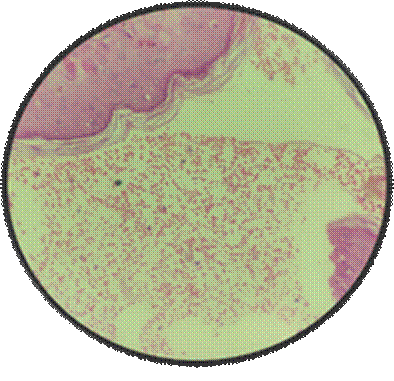
Figure 3b
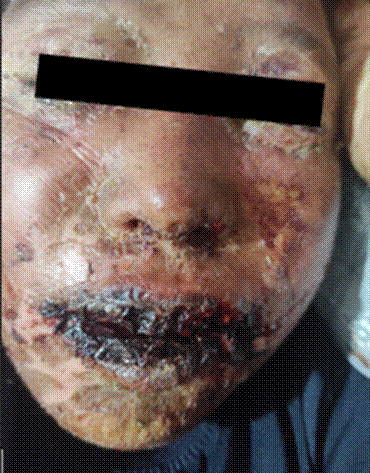
Figure 3c
Figure 3: (a) Flaccid vesicles coalescing into bullae over the bilateral upper eyelids and earlobes, with crusted, scaly plaques around the nose and mouth, and a few erosions on the nasal root (day 1 of admission). (b) Skin biopsy (4 mm punch; 4*, 10*, 40*) showing numerous necrotic keratinocytes with subepidermal separation and a perivascular lymphohistiocytic infiltrate with scattered eosinophils, consistent with interface dermatitis and a drug-induced reaction. (c) Hemorrhagic crusting of the lips with desquamation around the mouth and eyes (day 3 of admission).
This case highlights a rare DRESS/TEN overlap following a severe adverse reaction to allopurinol. Management included systemic corticosteroids, IVIG, supportive care, and strict infection control. The patient developed a secondary bacterial infection with Klebsiella pneumoniae, necessitating continued ceftriaxone guided by sensitivity results.
After two weeks of intensive therapy, his skin lesions, eosinophilia, and liver enzymes gradually improved. He was discharged on a tapered course of oral prednisolone and counseled to avoid allopurinol in the future.
DISCUSSION
In Bhutan, the most common drug groups causing adverse drug reactions (ADRs) are antibiotics, including penicillins, quinolones, and cephalosporins, followed by antihypertensive agents⁸. To date, no cases of allopurinol-induced ADRs have been reported locally. Globally, however, the incidence of allopurinol hypersensitivity varies. In Malaysia, an average of 2.5 cases per 1,000 new users was reported between 2015 and 2019, with SJS being the most frequent manifestation (143 cases; 46.8%)⁹. Similarly, allopurinol was the leading cause of severe cutaneous adverse reactions (SCARs) in Korea (2010-2015), with comparable trends reported in China and Portugal, where it accounted for 66 exposed patients (17.4%)10,12
The estimated incidence of DRESS syndrome is approximately 1 in 1,000 drug exposures, particularly with anticonvulsants, sulfonamides, and allopurinol⁶,⁷. DRESS is rare in allopurinol hypersensitivity syndrome (AHS), with one study reporting a frequency of 1 in 260 patients treated with allopurinol13. In our case series, patients developed SJS, SJS/TEN, and DRESS/TEN overlap. Although these are distinct syndromes, overlap cases have been reported⁵. The underlying mechanism involves immune-mediated hypersensitivity, with simultaneous activation of cytotoxic T cells, eosinophils, and inflammatory cytokines, leading to systemic inflammation and epidermal necrosis. Genetic predisposition, particularly HLA-B*58:01, plays a critical role in susceptibility. ⁵ Unfortunately, genetic screening was not available for our patients.
Risk factors for allopurinol hypersensitivity include female sex, age ≥60 years, renal or cardiovascular comorbidities, doses >100 mg, and use for asymptomatic hyperuricemia14. In our series, two patients were elderly females with multiple comorbidities, including CKD and hypertension, consistent with higher risk. These findings highlight the importance of careful risk assessment, close monitoring, and adherence to the American College of Rheumatology guidelines when prescribing allopurinol.
Management of severe hypersensitivity reactions begins with immediate withdrawal of the offending drug, followed by supportive care, systemic corticosteroids, IVIG, antibiotics, and a multidisciplinary approach. Mild-to-moderate reactions may respond to topical corticosteroids, while SJS/TEN cases require systemic therapy and monitoring in specialized units or ICUs. Mortality rates for SJS/TEN remain high, reaching up to 27%, whereas systemic corticosteroids are first-line therapy for DRESS5,15,17
In our resource-limited setting, all medications were promptly discontinued, and patients were managed in wards rather than specialized units, receiving high-dose prednisolone, with IVIG available for two patients. One patient with DRESS/TEN overlap initially received corticosteroids and was later supplemented with IVIG.
All three patients developed secondary bacterial infections: two with Klebsiella pneumoniae and one with Escherichia coli, treated according to culture sensitivity. Secondary infections are more common in TEN, with an incidence of 32.7%, and frequently involve Staphylococcus aureus, MRSA, and Enterococcus17. A Swedish burn center study reported 91.7% of patients with at least one positive culture, with 62.5% developing confirmed sepsis, the skin being the most common source of colonization (77.8%)18.
For high-risk patients, alternative urate-lowering therapies such as rasburicase or febuxostat a non-purine xanthine oxidase inhibitor can be considered19. Febuxostat is available in Bhutan (Form II base) and was used in our patients. The HLA-B*58:01 allele is strongly associated with SJS/TEN and DRESS/TEN overlaps, particularly in Asian populations, and genetic screening is recommended for Southeast Asian and African American patients prior to allopurinol initiation20. Unfortunately, such testing was unavailable for our cohort.
CONCLUSION
A lack of awareness of allopurinol hypersensitivity, its risk factors and incomplete patient history can delay diagnosis and management. Maintaining a high index of suspicion is essential to ensure timely and appropriate treatment. In resource-limited settings like ours, careful risk assessment, patient counselling, thorough history taking, and prompt withdrawal of the offending drug are critical to prevent severe complications and improve outcomes.
INFORMED CONSENT
Informed written consent was obtained from all the patients and including their attendants for the use of clinical images and information for publication in the case report.
ACKNOWLEDGEMENT
We extend our heartfelt gratitude to the patients for their consent and staff of ERRH medical and JDWNRH dermatology unit.
REFERENCES
1. Stamp LK, Day RO, Yun J. Allopurinol hypersensitivity: investigating the cause and minimizing the risk. Nat Rev Rheumatol 2016 :12;235 -43. [Pub Med] [DOI]
2. Khanna D, Fitzgerald JD, Khanna PP, et all American College of Rheumatology. 2012 American College of Rheumatology guidelines for management of gout. Part 1: systematic non pharmacologic and pharmacologic therapeutic approaches to hyperuricemia. Arthritis Care Res (Hoboken) 2012;64:1431 - 46. [Pub Med] [DOI]
3. Yokose C, Lu N, Xie H, et al. heart disease and the risk of allopurinol-associated severe cutaneous adverse reactions: a general population-based cohort study. CMAJ 2019;191(39): E1070-7 [Pub Med] [DOI
4. Paster J, Hotzenecker W, Ahn S. Cutaneous drug reactions: classification, diagnosis, clinical and therapeutic consequences. Allergo J Int. 2025;34(7):251-61. [DOI]
5. Carla Brenda Chavez Garcia, Omar Alejandro Leal Avalos, Itzel Alejandra Martinez Ramirez, Laura Leticia Torres Martinez, Hortencia Yamilet Rivas Ortiz. A Rare and Complex Overlap of Toxic Epidermal Necrolysis (TEN) and Drug Reaction with Eosinophilia and Systemic Symptoms (DRESS): A Case Report and Review of the Literature. International Journal Of Medical Science And Clinical Research Studies [Internet]. 2024Nov.19 [DOI]
6. Martinez JD, Franco R, Saenz LM, Alvarado AG, Garcia JA, Delgado SM, Ionescu M-A, Busila C, Tatu AL. DRESS and Stevens-Johnson Syndrome overlap secondary to allopurinol in a 50-year-old man-a diagnostic and treatment challenge: case report. Life. 2023;13(12):2251 [DOI]
7. Bouvresse S, Valeyrie-Allanore L, Ortonne N, et al. Toxic epidermal necrolysis, DRESS, AGEP: do overlap cases exist?. Orphanet J Rare Dis. 2012;7:72. [DOI]
8. Chejor P, Tenzin J, Tsheten T, Dorji J, Jamphel K. Analysis of adverse drug reactions reported to national pharmacovigilance center of Bhutan. Bhutan Health Journal. 2021 Jun. 4 ;6(2):1-5. [DOI]
9. Ng WL, Lim KS, Hariraj V, et al. Incidence of allopurinol-induced severe cutaneous adverse drug reaction in Malaysia. Br J Clin Pharmacol. 2022;88(8):3782-3788. [Pub Med] [DOI]
10. Kang DY, Yun J, Lee SY, Koh YI, Sim DW, Kim S, et all. Korean Severe Cutaneous Adverse Reactions Consortium. A Nationwide Study of Severe Cutaneous Adverse Reactions Based on the Multicenter Registry in Korea. J Allergy Clin Immunol Pract. 2021 Feb;9(2):929-936.e7 [Pub Med] [DOI]
11. Mendes D, Oliveira AR, Alves C, Batel Marques F. Spontaneous reports of hypersensitivity adverse drug reactions in Portugal: a retrospective analysis. Expert Opin Drug Saf. 2020 Jun;19(6):763-769 [Pub Med] [DOI]
12. Zhao J, Hu L, Zhang L, Zhou M, Gao L, Cheng L. Causative drugs for drug-induced cutaneous reactions in central China: a 608-case analysis. An Bras Dermatol. 2019; 94(6): 664-670 [Pub Med] [DOI]
13. Markel A. Allopurinol-induced DRESS syndrome. Isr Med Assoc J. 2005;7(10):656-660. [Pub Med] [DOI]
14. Yang CY, Chen CH, Deng ST, Huang CS, Lin YJ, Chen YJ, et all. Allopurinol Use and Risk of Fatal Hypersensitivity Reactions: A Nationwide Population-Based Study in Taiwan. JAMA Intern Med. 2015 Sep;175(9):1550-7. [Pub Med] [DOI]
15. Cho YT, Yang CW, Chu CY. Drug Reaction with Eosinophilia and Systemic Symptoms (DRESS): An Interplay among Drugs, Viruses, and Immune System. Int J Mol Sci. 2017;18(6):1243. Published 2017 Jun 9. doi:10.3390/ijms18061243 [Pub Med] [DOI]
16. Broyles AD, Banerji A, Barmettler S, Biggs CM, Blumenthal K, Brennan PJ, et al. Practical Guidance for the Evaluation and Management of Drug Hypersensitivity: Specific Drugs. J Allergy Clin Immunol Pract. 2020 Oct;8(9S):S16-S116. [Pub Med] [DOI]
17. Kaimal S, Lobo C, Narayan G, Augustine M. Stevens-Johnson Syndrome and Toxic Epidermal Necrolysis: A Fresh Look at an Old Foe. Indian J Dermatol. 2023 Jan-Feb;68(1):34-40 [Pub Med] [DOI]
18. Tocco-Tussardi, F Huss, B Presman. Microbiological findings and antibacterial therapy in Stevens-Johnson syndrome/toxic epidermal necrolysis patients from a Swedish Burn Center. J Cutan Pathol 44(2017), pp. 420-432 [Pub Med] [DOI]
19. Richette P, Briere C, Hoenen-Clavert V, Loeuille D, Bardin T. Rasburicase for tophaceous gout not treatable with allopurinol: An exploratory study. J Rheumatol 2007;34:2093-8. [Pub Med] [DOI]
20. Saito Y, Stamp LK, Caudle KE, Hershfield MS, McDonagh EM, Callaghan JT, et all; Clinical Pharmacogenetics Implementation Consortium. Clinical Pharmacogenetics Implementation Consortium (CPIC) guidelines for human leukocyte antigen B (HLA-B) genotype and allopurinol dosing: 2015 update. Clin Pharmacol Ther. 2016 Jan;99(1):36-7. [Pub Med] [DOI]
|
AUTHORS CONTRIBUTION Following authors have made substantial contributions to the manuscript as under: AM: Concept, designing, data collection, definition of intellectual content analysis, write up, literature review, guarantor and manuscript editing BM: Concept, designing, data collection, analysis, literature review and manuscript editing VS: Data collection, analysis and literature review NB: Write up, literature review and manuscript review Authors agree to be accountable for all respects of the work in ensuring that questions related to the accuracy and integrity of any part of the work are appropriately investigated and resolved. |
|
CONFLICT OF INTEREST None GRANT SUPPORT AND FINANCIAL DISCLOSURE None |