SHORT REPORT
https://doi.org/10.47811/bhj.192
Bhutan’s Medical Relief Mission to Myanmar Earthquake 2025: Operational insights and policy recommendations
Kuenzang Wangdi1, Tashi Tenzin2, Yeshi Dorji3, Tashi Wangchuk4
1Department of Orthopedics, Jigme Dorji Wangchuck National Referral Hospital, Thimphu, Bhutan
2Department of Surgery, Jigme Dorji Wangchuck National Referral Hospital, Thimphu, Bhutan
3Department of Orthopedics, Military Hospital Lungtenphu, Thimphu, Bhutan
4Department of Anesthesia, Jigme Dorji Wangchuck National Referral Hospital, Thimphu, Bhutan
Corresponding author:
Kuenzang Wangdi
ABSTRACT
A catastrophic 7.7-magnitude earthquake struck central Myanmar on March 28, 2025, causing destruction of infrastructure, deaths, injuries and displacement of nearly 200,000 people. In response to this humanitarian crisis, Bhutan deployed it’s emergency medical team to support relief operations. This short report evaluates the mission’s operational strengths, challenges and lessons learned. Drawing on field observations, structured debriefings and prior mission experience, it highlights critical insights to inform future disaster preparedness, coordination and response efforts by emergency medical teams.
Keywords: Bhutan; Disaster; Earthquake; Field Hospital; Emergency Medical Team; Humanitarian assistance; Myanmar
INTRODUCTION
In an exemplary display of international solidarity and humanitarian commitment, the Kingdom of Bhutan swiftly responded to the devastating earthquake that struck Myanmar on March 28, 2025, by deploying a dedicated medical relief mission under the guidance of His Majesty The King. Bhutan’s Emergency Medical Team (BEMT) provided level 2 equivalent EMT services as defined by the World Health Organization (WHO) and broader humanitarian support to one of the most severely affected regions, Nay Pyi Taw1. This EMT level underscores the mission’s capacity to manage a significant patient load with complex needs, operating with a degree of self-sufficiency in a challenging environment1.
The clear organizational and deployment structure and experienced leadership were crucial in navigating the challenges associated with such a mission in a disaster zone that was also facing security issues and political uncertainties. This mission underscored Bhutan’s growing capacity and willingness to contribute to global humanitarian efforts, reflecting the nation's deeply ingrained values of compassion and service.
This report delves into the operational insights gained from Bhutan’s medical relief mission to the Myanmar earthquake of 2025. It examines the key aspects of the mission’s planning, execution, and impact, highlighting strengths, challenges, and lessons learned. Furthermore, based on this analysis, the report puts forth a series of policy recommendations aimed at enhancing Bhutan’s future medical relief capabilities and contributing to the broader discourse on effective national and international disaster response. These recommendations draw upon established international guidelines, such as those provided by the Inter-Agency Standing Committee (IASC) on the emergency response preparedness, which emphasizes the importance of robust national preparedness frameworks, clear coordination mechanisms, and adherence to the minimum standards in humanitarian action2. The analysis focuses on the six domains of deployment logistics, clinical services, interagency coordination, resource utilization, workforce performance, and recovery planning.
Deployment
The team was deployed in a phased manner after the earthquake to operate from Pyinmana Township, one of the worst-hit regions. The phased deployment of the BEMT played a pivotal role in ensuring mission effectiveness and operational efficiency. Initially, a 40-member team was deployed on April 1 2025 to conduct a rapid on-ground evaluation of the situation and identify critical needs and provide basic emergency medical care. Based on their recommendations, a second, more comprehensive medical response team comprising 47 members was deployed on April 4 2025. The second team was equipped with all required medical equipment, surgical instruments, implants, emergency supplies, and consumables to ensure uninterrupted service delivery at the deployment site. Team members comprised a multidisciplinary group of healthcare professionals, support personnel including Volunteers (Desuups, Gyalsups) and logisticians. By April 4, a mobile tent-based field hospital became fully operational at the Paung Laung Stadium (Figure 1).
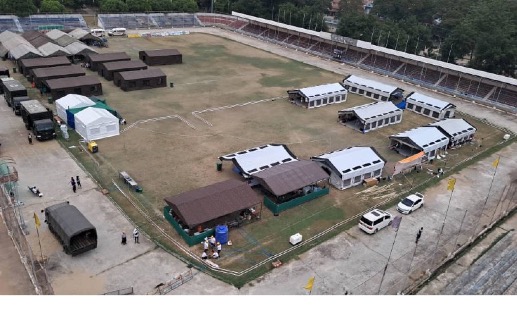
Fig 1. The mobile tent-based field hospital set up at the Paung Laung Stadium, Nay Pyi Taw, Myanmar.
Table. 1: Composition of the medical team during the Medical Relief Mission to Myanmar Earthquake 2025
|
Specialty |
Number |
|
Neurosurgeon |
1 |
|
Anesthesiologist |
2 |
|
Orthopedic Surgeon |
2 |
|
General Surgeon |
1 |
|
Emergency Physician |
2 |
|
Radiologist |
1 |
|
Medical Officer |
2 |
|
Pharmacist /Technician |
2 |
|
Laboratory technologist/technician |
3 |
|
Orthopedic Technician |
3 |
|
Radiology technician |
2 |
|
Scrub Nurse |
6 |
|
Post-anesthesia care unit nurse |
1 |
|
Operating theatre technician |
1 |
|
Nurses |
10 |
|
Anesthesia technician |
1 |
|
Central sterile supply department nurse |
1 |
|
Infection Prevention and Control nurse |
1 |
The inclusion of personnel with prior diplomatic and disaster experience from a similar relief effort in Nepal was noted as a significant factor in the mission's smooth execution3. Notably, this mission marked the first international deployment of Gyalsung (Bhutan’s National Service) with seven Gyalsups from the 2024 batch.
Medical services
Medical services were provided from the field hospital established at the Paung Laung Stadium in Pyinmana Township. The services included an outpatient clinic, an inpatient ward, level 2 operating theatres (OT), a pharmacy, laboratory services, X-ray, ultrasound and blood transfusion services. The OTs were later enhanced for both general and orthopedic surgeries with support from the Government of Myanmar (Figures 2 – 4). This assistance included the provision of OT tables, surgical lights, anesthesia machines, and the installation of air conditioning in the OT, enabling the surgical team to carry out procedures without significant challenges.
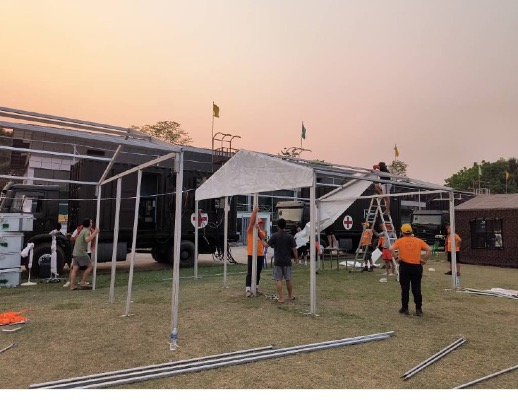
Fig 2. Setting up the operation theatre at the Paung Laung Stadium, Nay Pyi Taw, Myanmar.
The field hospital operated 24/7, with the team working in three shifts to ensure continuous service delivery while mitigating staff exhaustion. Initially, the cases were predominantly trauma-related, resulting directly from the earthquake. However, as the mission progressed and word spread, the team adapted to treat a broader range of conditions, including chronic illnesses and patients who had lost access to regular medications due to displacement and destruction of infrastructure
Over the 17-day period, the BEMT successfully treated over 3,600 patients. A total of 75 surgeries were conducted, primarily involving wound debridements and orthopedic procedures related to trauma injuries. Daily briefings with Myanmar’s disaster authorities ensured effective case referrals and equitable supply distribution. Unlike the 2015 Nepal mission, where Bhutan operated independently, the Myanmar response benefited from structured host-country collaboration.
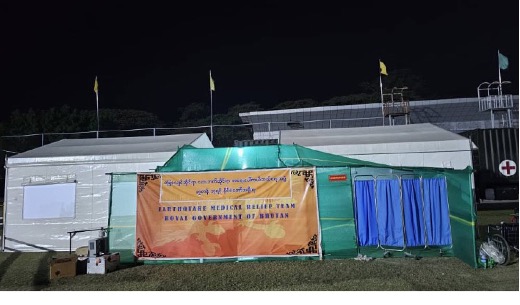
Fig 3. Two functional operation theatres at the Paung Laung Stadium, Nay Pyi Taw, Myanmar.
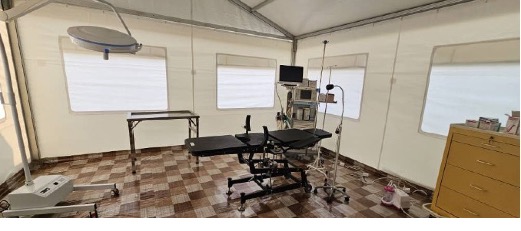
Fig 4. Operation room set-up at the Paung Laung Stadium, Nay Pyi Taw, Myanmar.
Coordination and Collaboration
The mission’s success was driven by strong coordination, clear leadership and effective collaboration. Guided by His Majesty The King and supported by the Royal Government of Bhutan, the team operated under a unified command structure that enabled swift decision-making and seamless coordination with authorities in Myanmar. Working alongside Myanmar’s Ministry of Health and other local government agencies, the BEMT ensured seamless integration into the local healthcare system through joint patient management, data sharing and proper patient handovers, fostering trust and continuity of care.
The BEMT maintained self-sufficiency by bringing essential supplies while relying on Myanmar for water, electricity, and sanitation. This approach minimized strain on local resources. Beyond medical services, the BEMT addressed community needs by installing SkyHydrant MAX water filtration systems and distributing relief materials. The BEMT camp became a model for disaster response, drawing attention from other international teams and local officials. The mission’s compassion and cultural sensitivity built long lasting bonds with the community, reflected in the gratitude and support expressed by the people and media of Myanmar.
Resource Utilization
BEMT demonstrated remarkable efficiency in resource mobilization and management. Through proactive planning and close coordination, the team ensured the continuous availability of essential supplies, food, and equipment in coordination with the local authority.
Workforce Performance
BEMT’s workforce was organized into specialized teams: medical care providers, logistic support team, communication and coordination team and non-clinical support such as cooking and camp management. This structure enhanced efficiency, ensured continuity of operations and minimized fatigue. Regular debriefings and role clarification contributed to maintaining high morale and performance in a resource-limited and high-pressure setting.
Recovery planning
Transition planning from the acute emergency care to routine healthcare service provision was a critical step. The decision was guided by assessment of the patient load, stabilization of the local health systems, and coordination with the local authorities. Recovery planning involved a gradual handover of the responsibilities to local health facilities, ensuring continuity of care while allowing the mission team to demobilize systematically.
Daily reporting system
WHO EMT Minimum Data Set (MDS) reporting system was used to update the local Ministry of Health and WHO on a daily basis which included data on patient consultations, health events, and risks to maintain the trends of our daily workload. Similarly, pre-deployment and pre-departure reports were submitted as required.
Challenges Encountered
The absence of a standardized triage system hindered the timely identification and management of critically ill patients. Pharmacy operations in the open-air exposed essential medicines to extreme temperatures and humidity, compromising safety. Shortages of spinal implants and unavailability of imaging equipment such as the C-arm, limited the surgical team's ability to perform complex spine procedures.
Additionally, around 35% of stablised patients remained hospitalized due to the complete or partial destruction of their homes. This situation underscores the critical need for a coordinated post-disaster recovery framework that includes transitional housing and social support systems to facilitate timely discharges and reduce hospital overcrowding.
Key Recommendations
1. Formalize and standardize international EMT protocols
a) Develop and implement comprehensive Standard Operating Procedures (SOP):
Establishing functional EMTs at both national and sub-national level, in the alignment with WHO EMT initiative standards and rigorously applying dynamic, evidence-based SOPs is essential to ensure the consistency, efficiency, and effectiveness of international medical relief missions 1,4,5. Regular training, simulation drills, and continuous professional development should be institutionalized5. The SOP must have dedicated sections addressing the pre-deployment, deployment and post deployment phases, outlining the specific requirements, actions, and standard to be followed during each stage1, 4.
b) Maintain a regularly updated roster of trained personnel:
Diligently maintaining a national roster of pre-vetted and trained personnel will enable rapid and effective deployment. The roster should include diverse medical and support professionals, integrating national programs such as Desuups, Gyalsups and the Royal Bhutan Army, and link to a centralized National Emergency Registry for verified credential tracking1, 6.
c) Implement regular simulation exercises and comprehensive training programs:
Joint simulation exercises and robust training programs should be conducted involving the Ministry of Health, Royal Bhutan Army, Desuung, Gyalsung Program, and other relevant national and international partners1,4. These trainings should focus on strengthening core competencies such as humanitarian principles, cultural sensitivity, and best practices for working in complex and potentially insecure emergency environments1,4. In addition, training must enhance technical skills including the application of clinical protocols, use of specialized equipment, and disaster medicine1. Emphasis should also be placed on improving coordination and communication through inter-agency collaboration, effective communication strategies and standardized reporting systems1,4. A structured learning and development pathway is essential to identify and mentor potential team leaders, ensure continuous professional growth and build knowledge progressively across all rostered personnel1.
2. Pre-Deployment Enhancements
To ensure rapid and effective EMT deployment, key preparatory measures aligned with international standards are essential. EMTs should maintain standardized, pre-packaged kits containing essential supplies, medications and equipment for trauma, infectious diseases, and obstetric emergencies1. Storage boxes must be clearly labeled, protected from external damage and supported by a system to monitor stock and maintain an audit trail1.
Strong Infection Prevention and Control protocols, including sterilization indicators and validated autoclave processes, are vital to ensure patient and staff safety during outbreaks and mass casualty events1. EMTs should also be equipped with Point-of-Care Ultrasound devices to enable rapid diagnosis in resource-limited settings1.
Standardized traige training for all EMT personnel is mandatory to ensure effective patient priorotization. Training should follow internationally recognized standards, such as WHO guidelines, to promote consistency, efficiency, and ethical decision-making in medical care1.
3. Equipment and Infrastructure
Enhancing the operational capacity of field hospitals is essential for delivering quality care during disasters. This requires strategic investment and adherence to international standards for emergency medical infrastructure1. EMTs should prioritize newer, modular, and rapidly deployable field hospital technologies, such as inflatable or weather-resistant tents that can be quickly setup, adapted to local conditions, and easily demobilized after use1
Similarly, ensuring a reliable oxygen supply is essential. Mobile oxygen generation units, including portable oxygen plants, are vital for meeting clinical care standards, especially for level 3 or inpatient critical care in remote or resource-limited settings. These investments strengthen EMT’s ability to provide timely, effective and sustained medical response during emergencies1.
4. Policy Development and Capacity Building
A resilient EMT depends on robust policy frameworks and a well-trained workforce. Integrating disaster medicine into the curriculum of undergraduate and postgraduate medical education programs at the Khesar Gyalpo University of Medical Sciences of Bhutan would be a crucial step toward building this capacity. The university’s contingency guidelines for medical education during emergencies already underscore the importance of such preparedness1,7.
5. Regional Collaboration and Simulation Exercises
Strengthening Bhutan's regional emergency preparedness calls for formal engagement with regional emergency networks such as the South Asian Emergency Response Alliance and WHO’s regional disaster response frameworks. Regular joint simulation exercises with neighboring countries can enhance coordinated action, facilitate cross-border resource sharing, and build interoperability through shared training experiences, which is crucial given Bhutan’s geographical terrain and vulnerability to natural disasters9.
At the national level, strengthening inter-agency coordination for international humanitarian assistance remains a priority. This requires clearly defined roles, responsibilities and communication channels among government agencies, NGOs and international partners6,8. Active participation in international humanitarian forums will enable Bhutan to share its experiences, adopt best practices, and strengthen collaboration and resource mobilization for future emergency responses6,8.
6. Foster Specialized Skills and Knowledge Management
Building a highly skilled workforce is essential in strengthening Bhutan’s emergency response system. This includes creating opportunities for specialized training in trauma care, advanced emergency medicine, public health in emergencies, and managing communicable diseases in disaster settings6,8.
Establishing a knowledge management system will capture lessons from deployments and returning teams, inform policy updates and guide future training. Encouraging context-specific research and innovation in disaster medicine and humanitarian response will further enhance Bhutan’s capacity for self-reliant, efficient and compassionate emergency care delivery6,7.
DISCUSSION
The 2025 Myanmar earthquake prompted a swift international response, led by WHO and Myanmar’s Ministry of Health, supported by EMTs from 12 countries. Bhutan’s EMT worked alongside EMTs from India, China, Thailand, Singapore, and the ASEAN Coordinating Centre for Humanitarian Assistance (AHA Centre), gaining valuable insights in cross-border collaboration, resource disparities, and field level challenges. The AHA Centre played a pivotal role in streamlining regional aid efforts, facilitating the rapid deployment of Indonesia’s Medical Emergency Rescue Committee (MER-C) and Thailand’s Disaster Medical Assistance Team (DMAT) within 72 hours. Pre-existing regional agreements like the ASEAN Agreement on Disaster Management helped strealine visa processing and customs clearance for medical equipment, reinforcing the value of pre-established regional agreements in emergency response.
Compared to Bhutan’s disaster response during the 2015 Nepal earthquake, the response in Myanmar demonstrated significant improvement. BEMT operated two operating theatres, a significant step up from the lack of a dedicated operating room in Nepal, and integrated its efforts more closely with the host country’s medical team. However, the absence of standardized triage protocols and gaps in post-acute care coordination were challenging. Drawing from global best practices such as Japan’s structured DMAT, Bhutan can strengthen its readiness by developing a network of regional EMT based on disaster risk mapping.
CONCLUSION
Bhutan’s humanitarian mission in Myanmar highlights the country’s growing capcaity to deliver emergency medical assistance during complex international crises. The BEMT exhibited professionalism, adaptability, and resilience, successfully providing medical care and collaborating with international partners. However, the mission also revealed critical areas for improvement, including the lack of standardized triage protocols, supply chain disruptions, inadequate coordination of field movements, lack of a system to ensure a transition from acute care to continued care. Strengthening EMT training, upgrading equipment, integrating digital health tools and formalizing inter-agency coordination will be essential next steps. With these strategic improvements, Bhutan is well-positioned to become a regional leader in humanitarian emergency medical response.
Acknowledgement
We are grateful to Heidi Cordi for her assistance in reviewing the manuscript. Our sincere appreciation goes to the team leaders of BEMT for their crucial role in the success of this mission. We would also like to acknowledge the Myanmar medical team for their generous support. Most importantly, we commend the entire medical team for their unwavering dedication, which was instrumental in the outstanding success of this mission.
REFERENCES
1. World Health Organization. Classification and Minimum Standards for Emergency Medical Teams. Geneva: WHO: 2021. [Full Text]
2. Inter-agency Standing Committee. Guideline: Emergency Response Preparedness. Geneva: IASC Task Team on Preparedness and Resilience;2015. [Full Text]
3. United Nations Office for the Coordination of Humanitarian Affairs. Nepal Earthquake Humanitarian Response: April to September 2015. New York and Geneva: UNOCHA;2015. [Full Text]
4. International Federation of Red Cross and Red Crescent Societies. IFRC Secretariat Standard Operating Procedures for Disaster Response and Early Recovery in Asia Pacific. Zone Office / Asia Pacific / version 2.0. September 2011. [Cited 2025 May 15]. [Full Text]
5. Ministry of Health, Royal Government of Bhutan. Health Emergency and Disaster Contingency Plan, Thimphu; 2024. [Full Text]
6. Royal Government of Bhutan. Strategy for Emergency Medical Service 2018-2023: Ministry of Health; 2018.[Full Text]
7. Khesar Gyalpo University of Medical Services of Bhutan. Contingency Guideline for Medical Education during Emergency. Thimphu: 2021. [Full Text]
8. Ministry of Health, Royal Government of Bhutan. National Standard for Emergency Department, Thimphu; 2021. [Full Text]
9. Department of Local Governance and Disaster Management, RGOB. Health Emergency and Disaster Contingency Plan. Thimphu: 2023.[Full Text]